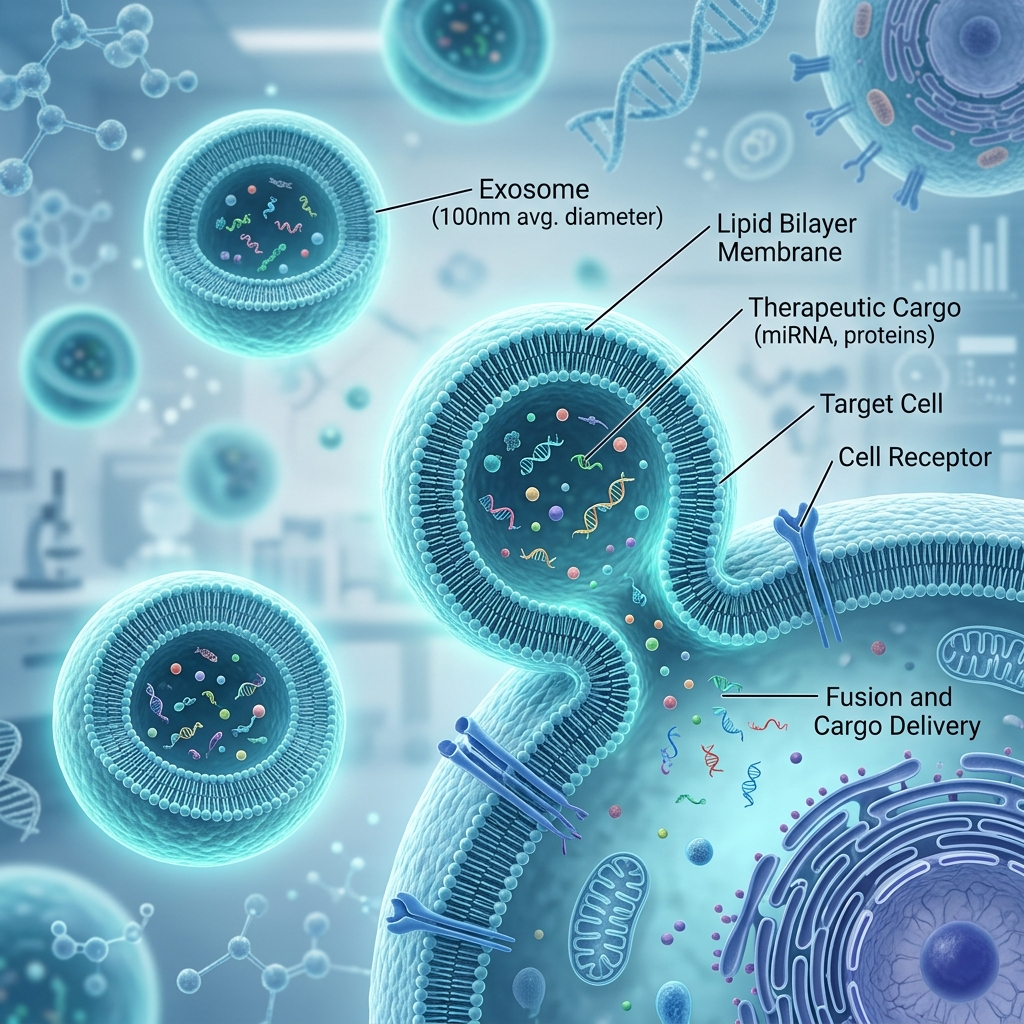
Extracellular vesicle diagram — cytosome and exosome cellular signaling
Related: Exosome Therapy
Amniotic EV Therapy

Cytosome Therapy
for Joint Signaling

Cytosomes™ are small, membrane-bound extracellular vesicles released by the developing fetus, placenta, and mother into the amniotic fluid — used at JRCU as a regenerative signaling option when imaging and candidacy support it.

Clinically reviewed by Devon Duplain, PA-C

What are cytosomes?

Cytosomes are small, membrane-bound extracellular vesicles (EVs) released by the developing fetus, placenta, and mother into the amniotic fluid. Extracellular vesicles are lipid bilayer-enclosed, cytosol-containing spheres released by cells into the extracellular environment. Primarily, EVs act in cell-to-cell communication.

This page restores the ranked /cytosomes URL from the prior WordPress site. It is not a copy of our exosome page — cytosomes are described here as amniotic-fluid EV products with a specific sourcing and processing story from the clinic’s legacy content.

Functions discussed in a clinical setting

Legacy clinic education listed these areas where cytosome / EV signaling is discussed with patients (educational — not FDA disease claims):

  • Tissue regeneration, pain relief, and wound-healing support
  • Vascular and angiogenesis signaling
  • Antimicrobial activity (educational claim from legacy product literature)
  • Stem and progenitor cell activation signaling
  • Immune modulation and neuroprotection (educational)

How cytosomes are developed and administered

Per legacy product education used on the old site: Cytosomes are procured from consenting, healthy, carefully screened and tested mothers at the time of cesarean section. Recovery is performed by tissue banks accredited by the American Association of Tissue Banks (AATB) following FDA and CDC guidelines.

Legacy copy noted a unique processing technique yielding crystal-clear fluid (never pink or cloudy), twice sterile filtered to maintain RNA integrity. Each 1cc was described as containing an average of 250 billion (±100 billion) EVs with particle size consistently between 50–150 nm, produced in a cGMP-compliant ISO 7 cleanroom laboratory, with sterility validated by an independent CLIA-certified lab.

Administration (legacy): Cytosomes may be used alone or in conjunction with other birth-tissue products. Depending on the joint, they may be diluted with preservative-free saline or PRP, or injected as-is once thawed to room temperature — under imaging guidance at JRCU.

Disclaimer (must preserve)

Human Cell, Purified Amniotic Fluid, and Tissue products are not FDA approved or licensed for the prevention, treatment, diagnosis, mitigation and/or cure of any disease or condition, including COVID-19. All statements and opinions provided are for educational and informational purposes only. Individuals interested in natural biologics therapy are urged to review all pertinent information with our clinicians and do their own research before choosing to participate in treatments utilizing natural biologics products.

Murray clinic details

Patients searching “cytosomes Utah” are seen at our Murray suite near I-215 / 1300 East — not a hospital OR. Drive time from downtown Salt Lake City is typically 12–20 minutes.

Joint Regeneration Center of Utah
6699 South 1300 East, Suite 150
Murray, UT 84121
(801) 996-3592 · (385) 257-9206 (text)
Mon–Fri: 9 AM – 5 PM

Frequently asked questions

Both are extracellular vesicle categories discussed in regenerative medicine. Our /exosomes page covers MSC-derived exosome protocols. This /cytosomes page covers the amniotic-fluid EV product the clinic historically marketed under the Cytosomes™ name. Your consult clarifies which, if either, fits your imaging.

Legacy education: amniotic fluid collected at cesarean section from screened donors through AATB-accredited tissue banks under FDA/CDC guidelines. Ask the clinical team for the current product insert at your visit.

JRCU emphasizes imaging-guided delivery for joint injections. Blind placement is not our standard for viscous biologics.

JRCU is a cash-based practice for regenerative biologics and does not accept Medicare or insurance for these therapies. Financing options such as CareCredit may be available — confirm at consult.

Related care at JRCU

Book on Zocdoc

Book Your Consultation